
CVC Words with Pictures Worksheet for Grade 1
Connect pictures with decoded CVC words, compare middle vowels, and move into independent picture spelling.
- Skill: Decode and spell picture-supported CVC words
- Learning goal: Blend familiar CVC words and connect the printed form with its meaning.
- Format: Printable PDF worksheet
- Answer key: Separate PDF available
 Download Worksheet PDF
 View Answer Key
A child looks at a picture of a pen and circles pin. The first and last letters are right, but that small middle vowel changes the whole word.
That’s a useful moment to pause—not simply mark the answer wrong. Can the child hear the vowel in pen? Can they connect that sound to e? Can they read both words and notice the difference?
This two-page CVC words with pictures worksheet gives first graders practice with those connections. Children match words to pictures, compare similar spellings, fill in missing vowels, and write words independently. Familiar pictures provide meaning, while the reading and spelling tasks bring attention back to every letter.
Worksheet preview and downloads
Download the two-page CVC words with pictures PDF. Teachers and parents can use the complete CVC answer key for both practice pages.
What Will Your Child Practice?
The goal is to read and spell short-vowel CVC words, using pictures to check meaning rather than guess the answer.
Across the two pages, children practice:
- Blending individual sounds to read a complete word.
- Hearing the beginning, middle, and ending sounds.
- Distinguishing short vowels in similar words.
- Matching written words to illustrations.
- Segmenting a spoken word and writing its letters.
- Rereading an answer to check that it makes sense.
The worksheet includes all five short vowels. It’s best suited to children who have already been introduced to those vowel sounds and the consonant sounds in the activities. If some are still unfamiliar, work through a few selected items together instead of assigning both pages independently.
What’s Inside the CVC Worksheet?
Page 1: Match, Choose, and Read
The opening activity uses cat, bed, pig, dog, and sun. Children connect the printed words with their pictures.
Next, they look more closely at similar words. A cat appears beside cat, can, and cot, while a pen appears beside pen, pin, and pan. Other items use pictures of a pig, log, and mug.
These choices make careful reading necessary. Recognizing the first letter won’t be enough: cat and can have different endings, while cat and cot have different middle vowels.
A read-and-color activity finishes the page. Before the crayons come out, ask the child to read the word and point to the picture they plan to color.
Page 2: Write Words and Review Short Vowels
The second page asks children to write bat, bed, lid, dog, and sun from pictures. Instead of recognizing an answer among choices, they now have to work out its spelling.
A word-box activity provides support for labeling five more pictures. The mini review then mixes several skills: finding short-a words, supplying missing vowels, and choosing the word that matches an illustration.
You don’t have to complete both pages in one sitting. Page 1 can be guided practice, with Page 2 saved for another session.
Start With One Picture and One Clear Model
Before beginning, check the picture names together. Mug, log, and lid deserve a quick look because children may use another word for the same object.
If a child calls the mug a cup, acknowledge it:
“Yes, it’s a kind of cup. On this worksheet, we’re using the word mug. Say mug with me.”
Then model one item. For a picture of a cat, try:
“This is a cat. Listen to its three sounds. Now let’s read the choices and find the word that spells cat.”
Point to each letter as you say its sound, then blend the sounds together. Use letter sounds rather than letter names, and keep consonants crisp instead of adding an extra “uh.”
Give the next item to the child. Offer help where it’s needed, but leave room for them to do the thinking.
Use Pictures Differently for Reading and Spelling
Pictures have a useful role, but the task matters.
When reading a printed word, encourage the child to look through the letters, say their sounds, and blend. Then check whether the word matches the picture. Naming an illustration alone doesn’t show that the child has read the word.
When spelling from a picture, start with its name. Say the word, separate its sounds, and choose the letters that represent them.
For sun, a child can move one counter for each sound, then write s, u, and n. Finally, ask them to read what they wrote.
That last step is easy to miss. Rereading gives children a way to check their own spelling rather than waiting for an adult to approve it.
Make the Middle Vowel the Talking Point
When a child chooses pin for the pen picture, try a specific prompt:
“You chose pin. Read it with me. Now say pen. What do you hear in the middle?”
Point to i and e as you compare the two words. If the child can’t yet hear the difference, model both words clearly and practice them together before returning to the choices.
Avoid assuming that every mistake has the same cause. A learner might confuse the vowel sound, forget its letter, overlook an ending, or misunderstand the picture.
Ask them to read their answer aloud. Their response often tells you more than the circle on the page.
Adjust the Activity Without Changing the Goal
For a child who feels overwhelmed, cover the rest of the page with a blank sheet of paper. Work on one row at a time. You can also read the directions aloud so that understanding the instructions doesn’t become a separate obstacle.
If handwriting is difficult, let the child build the word with letter tiles before copying it. This keeps the spelling task in place while reducing the writing demand.
For a confident reader, cover the pictures and ask them to read several words in a different order. Then introduce a new word with familiar letter-sound patterns, such as mat or hen. Reading a new example gives you a better check than repeatedly practicing a memorized row.
Turn Answer Checking Into a Short Conversation
For the word-choice section, the matching answers are cat, pen, pig, log, and mug. The independent picture-writing words are bat, bed, lid, dog, and sun.
In the mini review, the short-a words are cat and bat. The final picture choices are cup, bed, bat, log, and sun.
Rather than checking every answer silently, choose one correct response and ask:
“How did you know that word matched?”
A child who points to the letters and reads the word is showing you a different skill from a child who says, “Because that’s a dog.”
Use the answer key to check the remaining activities, but keep feedback focused. One helpful correction is more manageable than a long explanation of every mistake.
Before using the worksheet
Quickly review potentially ambiguous picture names such as lid, log, and mug. Complete only one model together. The child should say and blend each word rather than match lines by position.
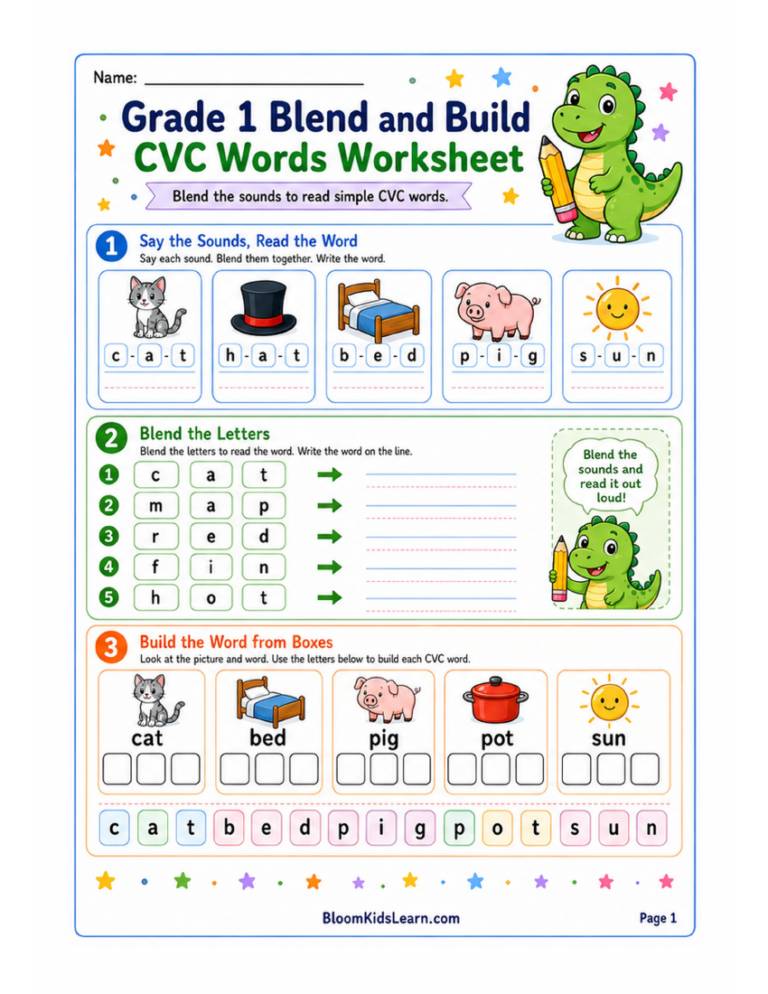
Afterward, cover the pictures and reread five written words. The next logical resource is the Blend and Build CVC Words Worksheet, where the sounds are manipulated more explicitly. Return to the CVC worksheet collection to choose another skill, or review the short-vowel pages if the middle sounds remain uncertain.
Finish With a Quick Read-and-Spell Check
After practice, cover the pictures and choose three printed words for the child to read. Next, say one familiar word without showing its spelling and ask them to build or write it.
Notice which parts are independent and which still need support. A brief note such as “Reads cat and sun; needs help hearing the vowel in bed” gives you a clear starting point for the next lesson.
If blending remains difficult, continue with supported sound-by-sound word building. If the middle vowels cause most of the errors, revisit short-vowel practice before adding more words.
Frequently Asked Questions
What is a CVC word?
CVC stands for consonant-vowel-consonant. In early phonics practice, examples such as cat, bed, pig, log, and sun contain a short vowel between two consonants. Not every three-letter word follows this pattern.
Should children name the pictures first?
Check unfamiliar picture names before starting. During reading, however, ask children to work through the printed letters rather than use the picture to guess. During picture-based spelling, naming the image is the starting point.
Can this worksheet be used for independent practice?
Yes, once the child understands the directions and knows the letter-sound relationships being practiced. Model an item first and listen to a few responses before leaving them to continue.
What if my child matches correctly but struggles to write the words?
Matching and spelling place different demands on a learner. Try saying the word slowly, moving one counter for each sound, and replacing the counters with letters. Then have the child blend and read the word they built.
 Preview