
Writing Numbers 1–50 Worksheet for Grade 1
Free Grade 1 write numbers 1-50 worksheet for number order, before-and-after questions, and multiples of 5.
- Skill: Write numbers in order from 1-50
- Learning goal: Complete number rows to 50 and identify before, after, between, and multiples of 5.
- Format: Printable PDF worksheet
 Download Worksheet PDF
Writing a continuous sequence from 1 through 50 requires more than neat numeral formation. Children must remember what comes next, keep their place, and handle the important changes that happen whenever the ones digit reaches 9. This Grade 1 worksheet focuses on that single purpose: writing numbers in order from 1 to 50.
What children practise
Learners write consecutive numerals across the page, beginning at 1 and continuing through five groups of ten. The long sequence gives useful practice with numeral recall, left-to-right tracking, spacing, and number order. It also reveals whether a child can move from one decade to the next without skipping or repeating a number.
Watch the decade changes
The most informative points on the worksheet are 9→10, 19→20, 29→30, 39→40, and 49→50. At each transition, the tens digit increases and the ones digit returns to zero. Ask the learner to pause before these changes and say the next number aloud.
- After 9 comes 10, the first two-digit number.
- After 19 comes 20, not 110 or 29.
- After 29 comes 30.
- After 39 comes 40.
- After 49 comes 50.
A small place-value reminder can help: 29 is two tens and nine ones. One more makes three complete tens, so the next number is 30.
What different mistakes mean
If a child writes 27, 28, 29, 40, the difficulty is probably number-sequence knowledge rather than handwriting. The learner knew that a new decade was approaching but selected the wrong one. Read the final five numbers of that decade and use a number chart to confirm the transition.
If the child says 30 correctly but forms the digits poorly, the sequence knowledge is likely secure and numeral formation needs attention. If a complete number is omitted, check whether the child lost place while moving to the next box. If numbers are repeated, have the learner point back to the last completed entry before continuing.
A practical way to use the worksheet
Divide the page into short sections instead of insisting on all 50 numbers at once. Complete 1–10, check the order, and continue when the learner is ready. For the next section, cover earlier rows so the eyes stay on the current line. Let the child use a number chart for the first attempt, then try a smaller section without it.
Do not turn every reversal into an interruption. Put a small mark beside the numeral, allow the learner to finish the short row, and revisit formation afterward. This keeps the number sequence as the main mathematical task.
Answer guidance and extension
The finished page should contain every whole number from 1 to 50 exactly once and in increasing order. Check each row ending and the first number of the following row; those boundaries are where many omissions occur. For an extension, choose a starting number such as 34 and ask the child to write the next ten numbers on blank paper.
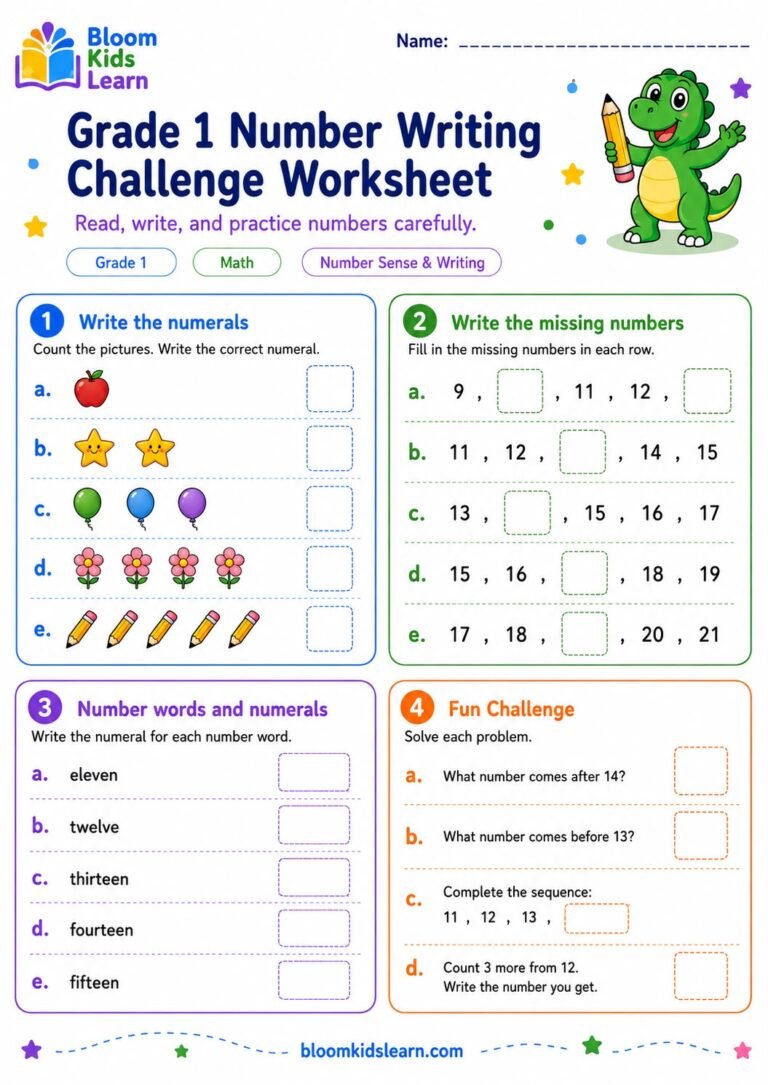
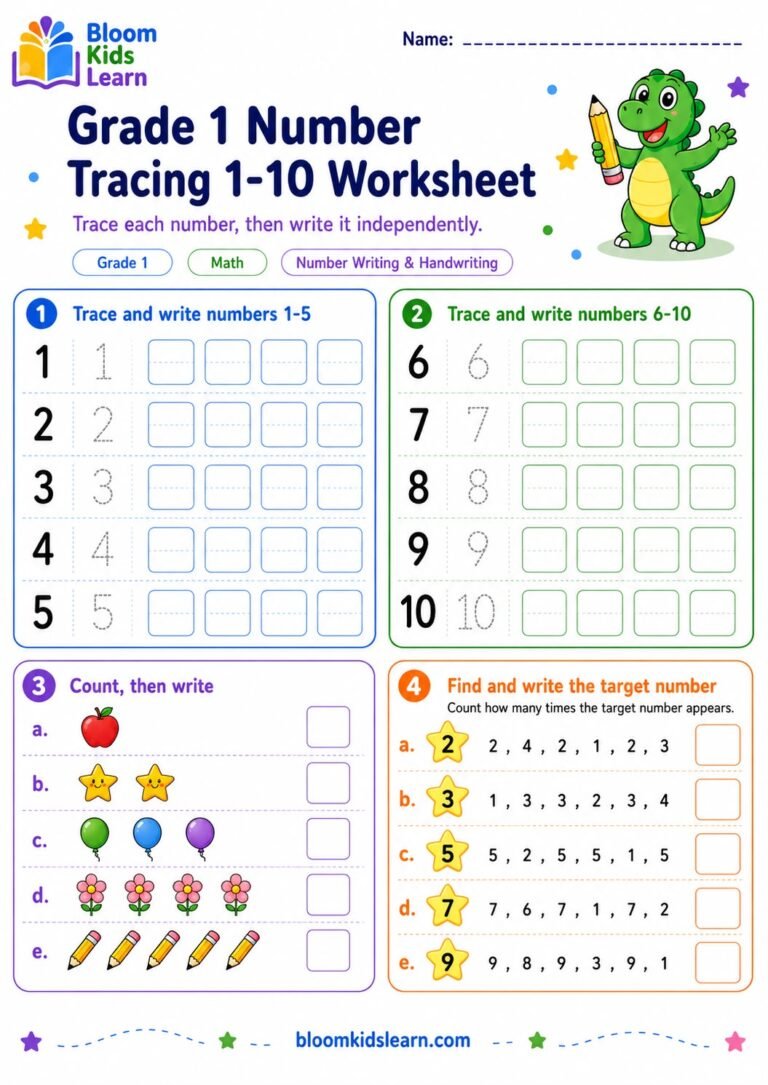
Learners who need more independent numeral practice can use the Number Writing Practice Worksheet. Children ready to combine number writing with counting and missing-number tasks can try the Number Writing Challenge Worksheet.

 Preview