
Middle Sounds Sort Worksheet for Grade 1
Cut, compare and sort picture words into short-vowel groups, first with a, e and i and then with o and u.
- Skill: Classify CVC picture words by their medial short-vowel phoneme
- Learning goal: Say each picture word, identify its middle sound, and justify its placement in an a, e, i, o or u group.
- Format: Printable PDF worksheet
- Answer key: Separate PDF available
 Download Worksheet PDF
 View Answer Key
Sorting asks a different question from filling a blank. Instead of solving one word at a time, a learner must compare several picture words and decide which share the same medial vowel. This two-page middle sounds sort worksheet for Grade 1 organizes CVC pictures into a, e, i, o, and u groups.
Download and Print the Middle Sounds Sort PDF
Download the Middle Sounds Answer Key PDF
The supplied middle sounds answer guide lists every picture group for this sort. The optional “one more word” responses can vary.
What Does This Grade 1 Worksheet Practice?
The sort practices phonemic comparison, short-vowel identification, and classification. Children must ignore the beginning and ending consonants long enough to hear what the words have in common. That makes the task useful after learners can identify vowels in individual words but before they are expected to manage mixed CVC reading independently.
What’s Included in This Worksheet?
Page 1 provides three sorting columns labeled a, e, and i. The picture bank contains cat, map, hat, bed, pen, hen, pig, lid, and fish. Children cut the cards or point and write the word in the correct column. A sound-review box provides space to say each target vowel.
Page 2 focuses on o and u. The o group is dog, fox, log, and box; the u group is sun, bus, rug, and cup. The extension asks for one additional word for each vowel. Suitable examples include pot for short o and mug for short u.
How to Teach a Short-Vowel Sound Sort
Model with two cards first. Say cat and map, stretch both words, and ask what sound they share in the middle. Place them under a. Then introduce a contrast such as bed. Explain that its middle sound is different, so it needs another group.
Before cutting, name every picture together. Then have the child place cards without glue so choices can be discussed and corrected. Ask, “What word did you say? What middle sound did you hear? Which heading has that sound?” Glue only after the oral check.
How to Use This Worksheet
- Say and identify all picture words.
- Cut out the cards, or use them as pointing cards if scissors are not appropriate.
- Choose one card and segment its three phonemes.
- Place it under the matching vowel heading.
- Read each completed group aloud to check that the medial sounds agree.
- Add an original word to the o and u groups on page 2.
For support, offer only two headings and six cards at a time. For an extension, turn the cards face down, say a word without showing the picture, and ask the learner to identify the group by listening alone.
How Does This Worksheet Help Grade 1 Students?
A sort reveals whether a child can transfer the concept across different consonant frames. The learner has to notice that cat, map, and hat belong together even though their beginnings and endings differ. Reading the finished columns also creates compact short-vowel word lists that can be reused for blending and spelling.
Common Mistakes and How to Help
Cards are grouped by the first letter or picture type. Restate the rule and cover the rest of the word while the child says only the middle sound. Place one correct example at the top of every group.
A picture is named differently. Agree on the worksheet word before sorting. For example, the intended words are rug, not “mat,” and cup, not “mug.” Either label could be sensible in another context, but the activity requires a shared word.
The learner sorts correctly but cannot explain why. Ask for one oral justification per group: “Hen goes under e because I hear /e/ in the middle.” This checks the sound rule without turning every card into a long discussion.
Short e and short i cards are mixed. Remove the other groups and compare only bed, pen, hen with pig, lid, fish. Return to the full sort after the contrast is more stable.
What Should Your Child Practice Next?
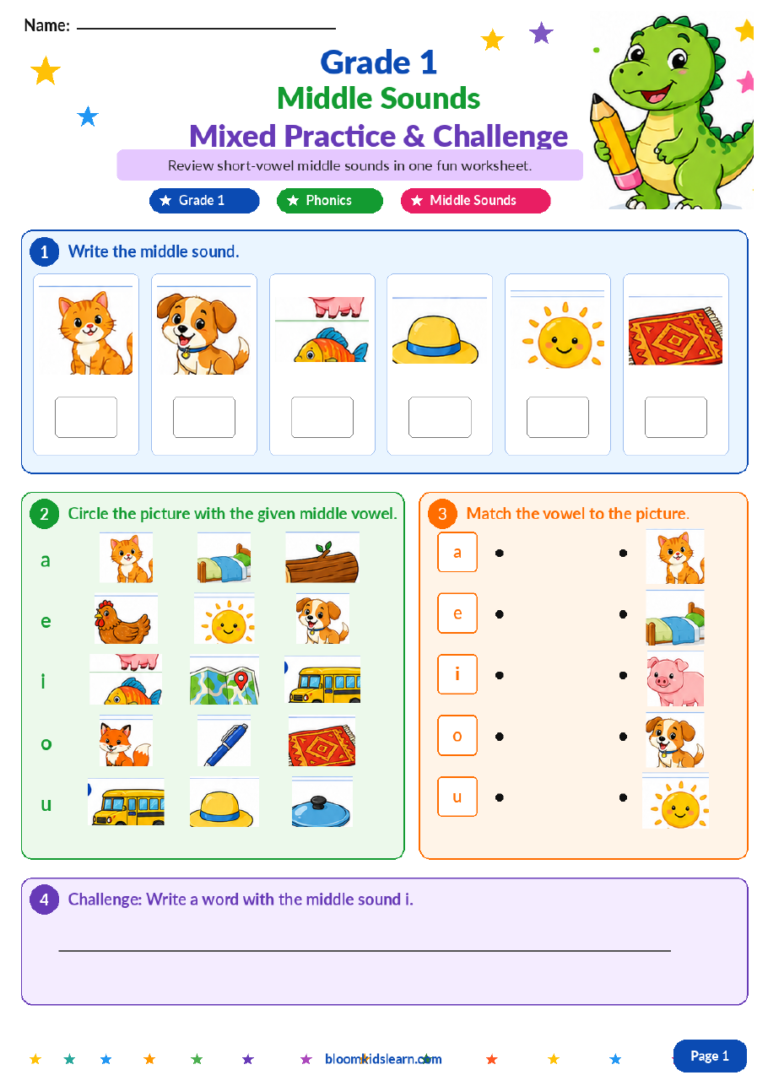
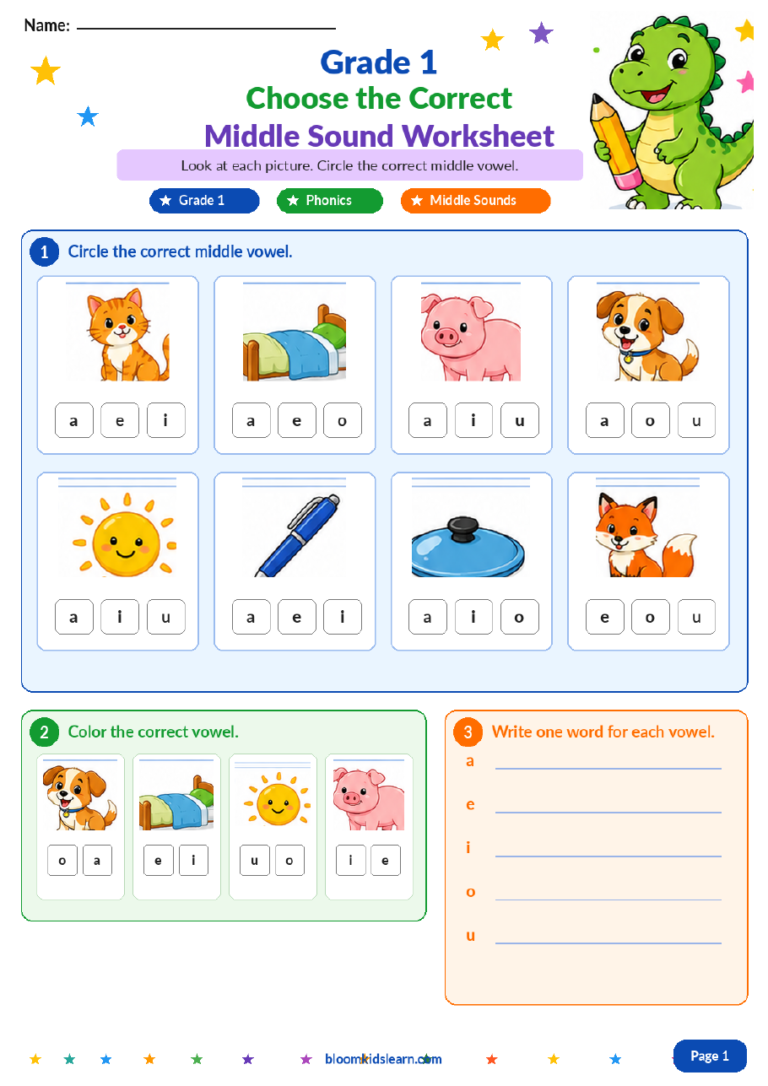
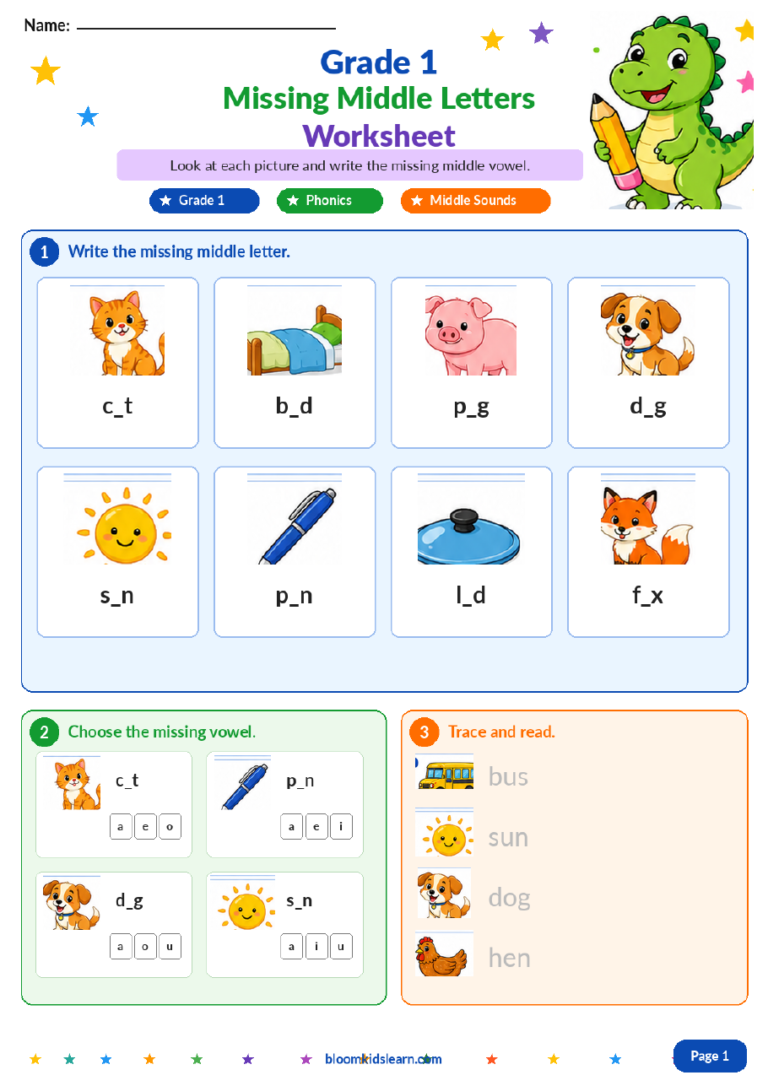
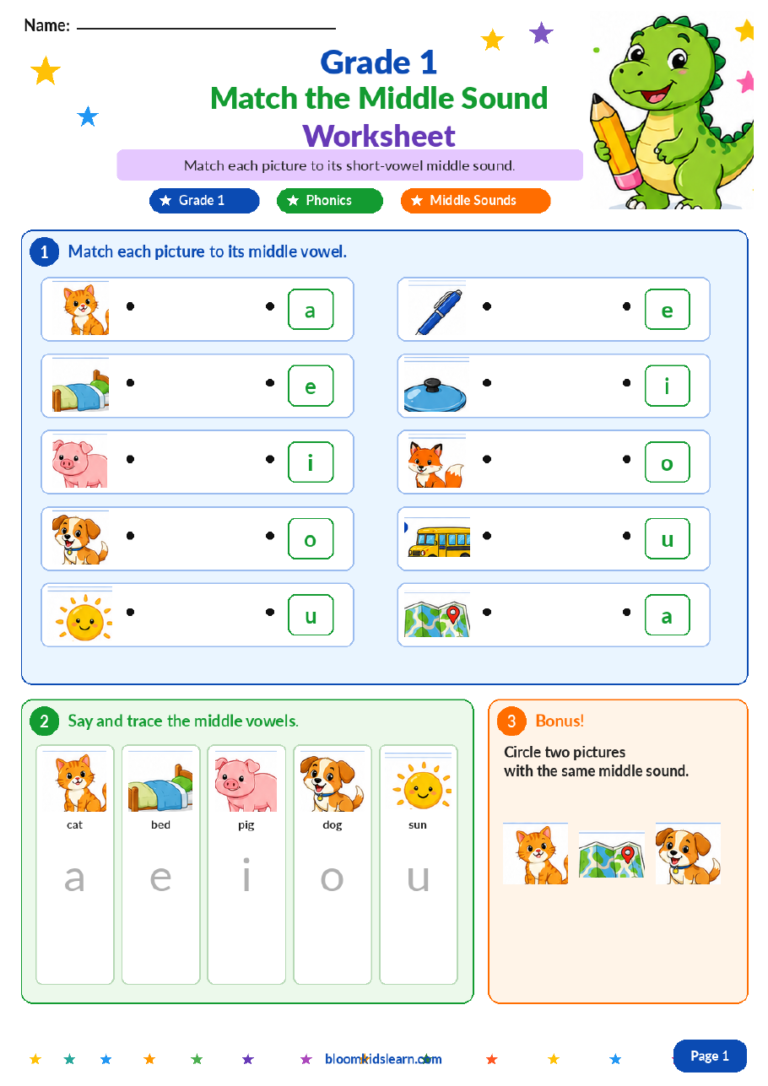
Use the Middle Sounds Mixed Practice Worksheet to check transfer across several task types. A child who struggles to sort may need the Middle Sound Matching Worksheet or focused Grade 1 short vowel practice first. The Middle Sounds hub explains the complete sequence.
Frequently Asked Questions
How does sorting words by middle sound help Grade 1 students?
Sorting requires children to compare words, ignore different consonants, and identify a shared medial vowel. The completed groups also become useful lists for blending and spelling review.
How do you teach a short-vowel sound sort?
Model two words that share a vowel and one contrasting word. Say, segment, identify the middle sound, and place each card under the appropriate vowel heading.
Should children sort pictures by sound or spelling?
Begin with the spoken sound. After the card is placed, connect that sound with the printed vowel heading. This keeps the activity phonics-based rather than purely visual.
What should I do when a child puts words in the wrong vowel group?
Ask the child to rename and stretch the word, then compare it with the model word at the top of that group. Let the learner move the card after hearing the difference.
 Preview