
Middle Sounds Worksheets for Grade 1
Choose five printable Grade 1 middle-sound worksheets arranged from low-writing matching practice to spelling, sorting and cumulative review.
- Skill: Short-vowel identification, medial sound discrimination, CVC decoding and spelling
- Learning goal: Help adults select and teach the right middle-sound worksheet for a Grade 1 learner's current phonics need.
- Format: Printable PDF worksheet
- Answer key: Separate PDF available
 View Answer Key
These printable middle sounds worksheets for Grade 1 focus on the short vowel heard inside simple CVC words. The five activities move from low-writing matching to vowel choices, missing letters, sorting, and mixed review. Each worksheet includes two A4 pages, a PDF preview, practical teaching guidance, and access to the supplied answer guide.
What Are Middle Sounds?
A middle sound is the sound heard between the beginning and ending sounds of a word. In simple CVC words, the middle sound is usually a short vowel. Say the word slowly and listen to the second phoneme:
- cat → /a/ → a
- bed → /e/ → e
- pig → /i/ → i
- dog → /o/ → o
- sun → /u/ → u
The sound and the letter are related but not identical. Children first need to hear /a/ in cat; then they connect that phoneme with the grapheme a. That sequence matters when a learner can say the answer but writes another vowel, or recognizes the letter but cannot find the sound in a spoken word.
Free Middle Sounds Worksheets for Grade 1
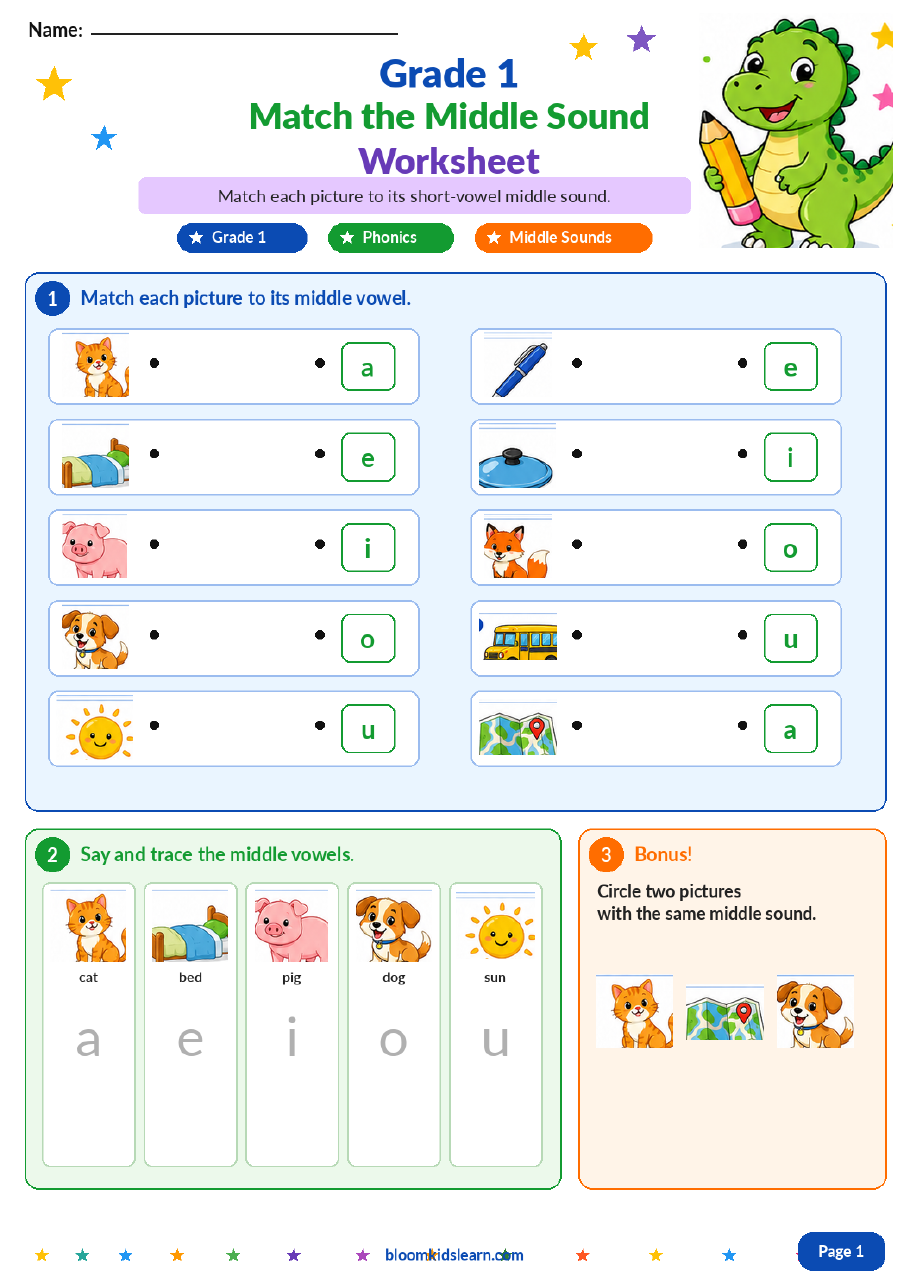
Match the Middle Sound
Match picture-supported CVC words to a, e, i, o, or u, trace vowels, and move into independent choices.
Skill: Match a heard medial phoneme with its vowel letter.
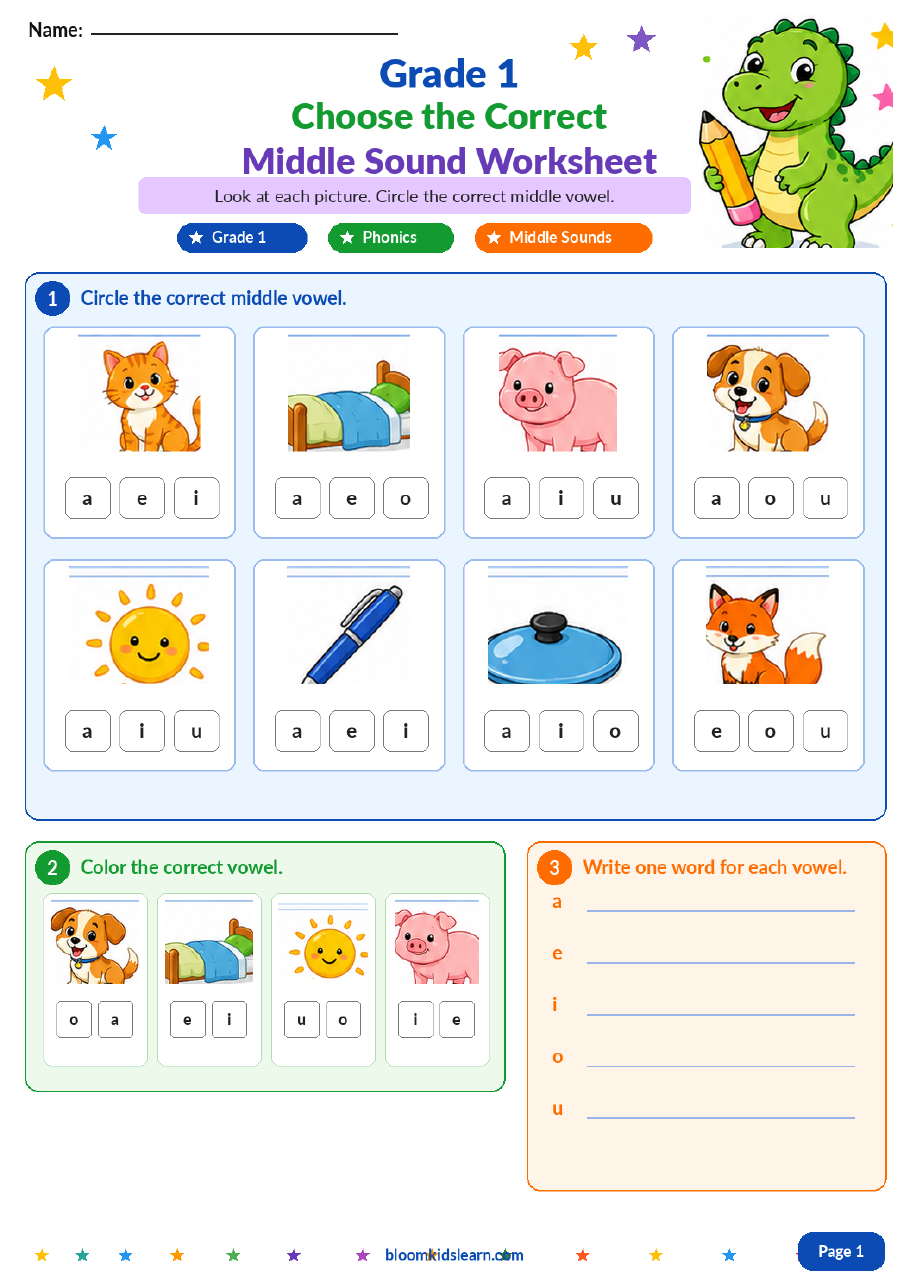
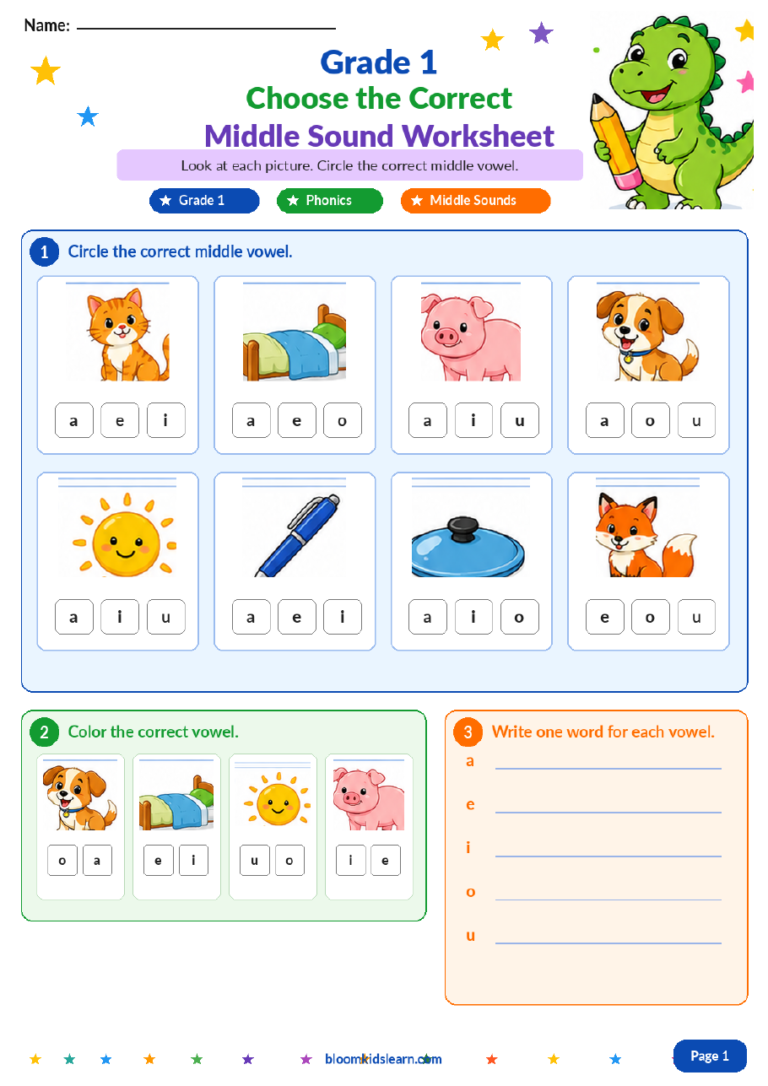
Choose the Correct Middle Sound
Compare several possible vowels for each picture word and explain why one choice matches the sound.
Skill: Discriminate among short-vowel alternatives.
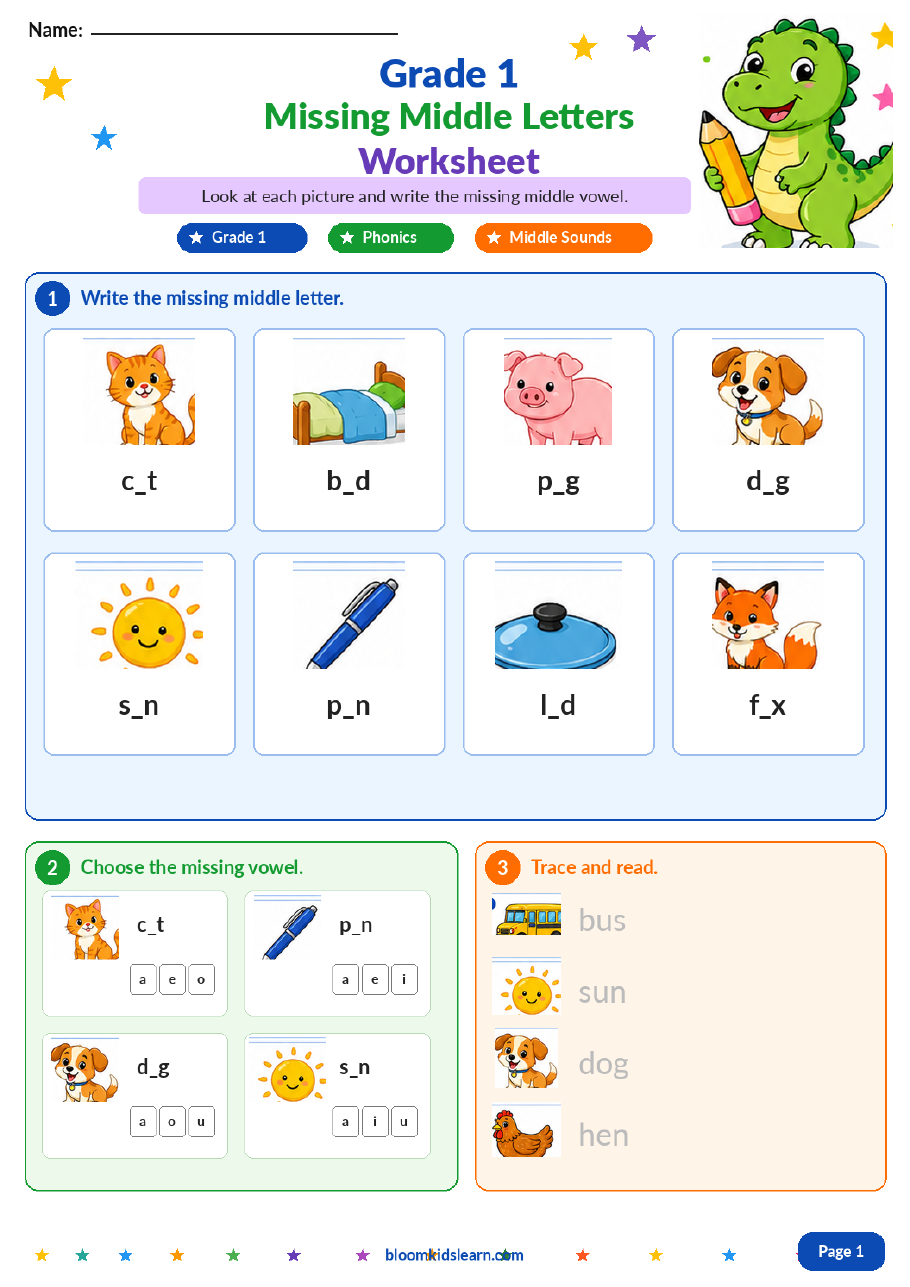
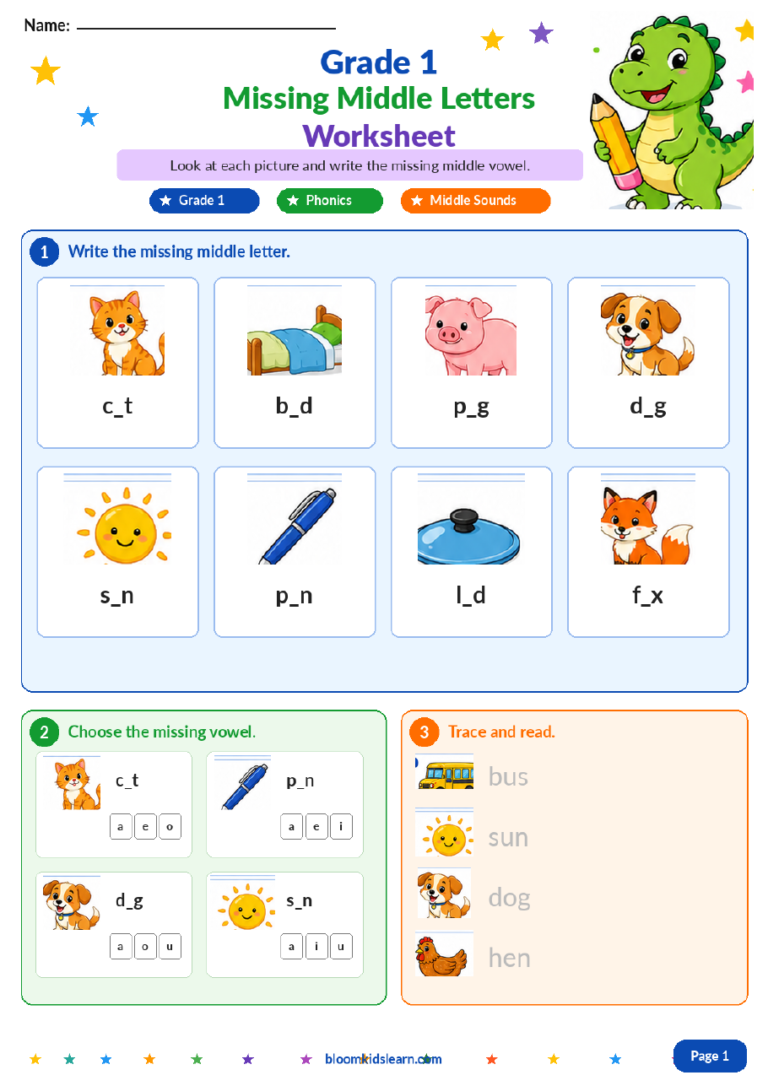
Missing Middle Letters
Complete CVC spellings such as c_t and correct inaccurate forms such as cot when the picture shows cat.
Skill: Recall and write a medial vowel grapheme.
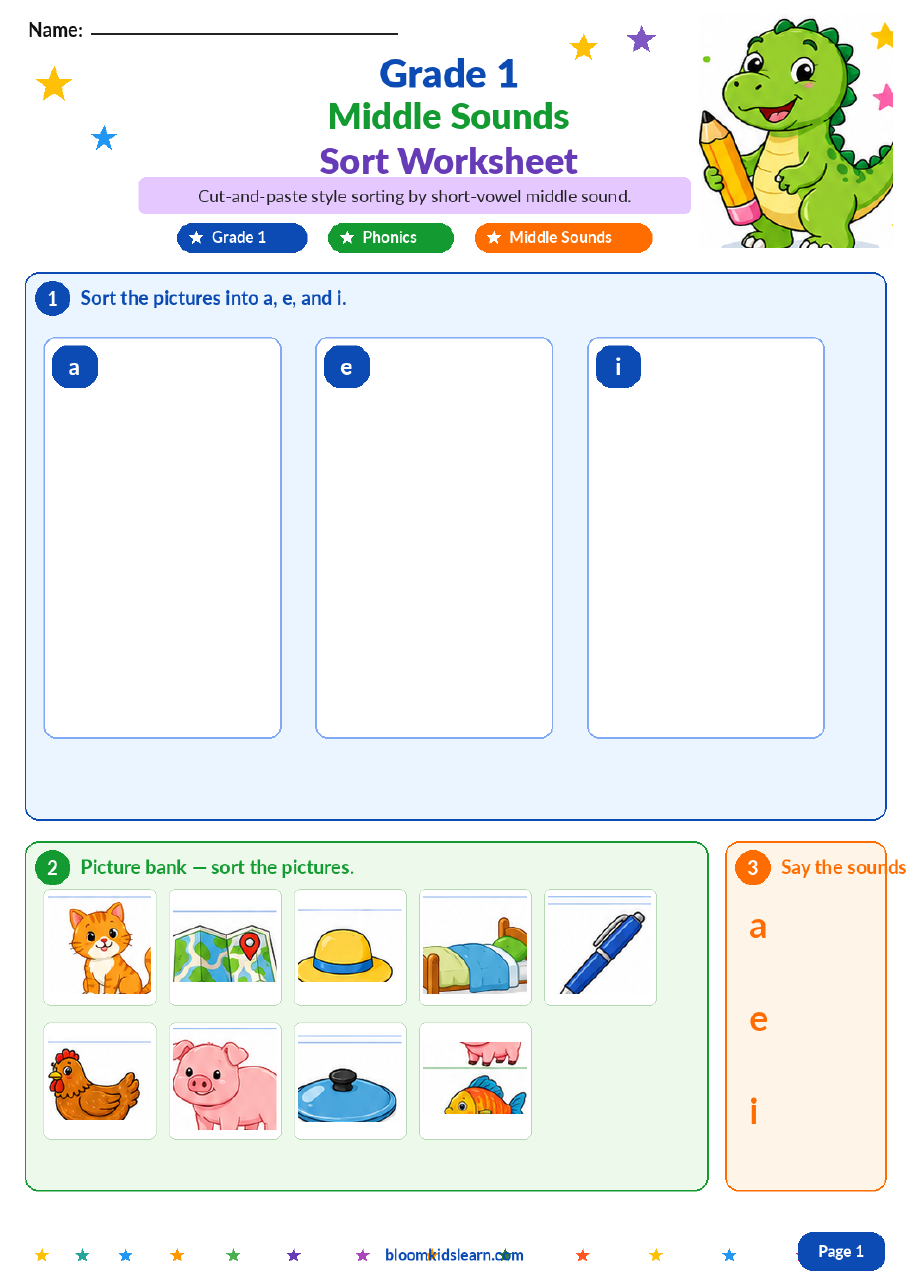
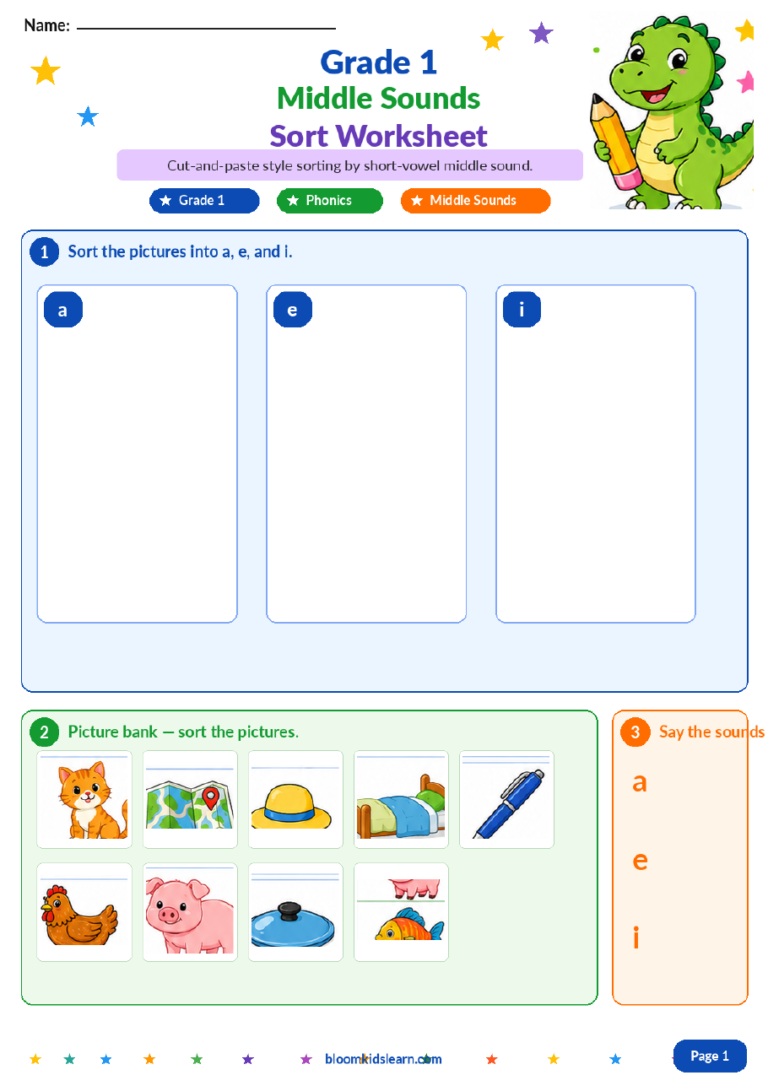
Middle Sounds Sort
Cut and classify picture words into short-vowel groups, then add another word to the o and u families.
Skill: Compare and categorize medial phonemes.
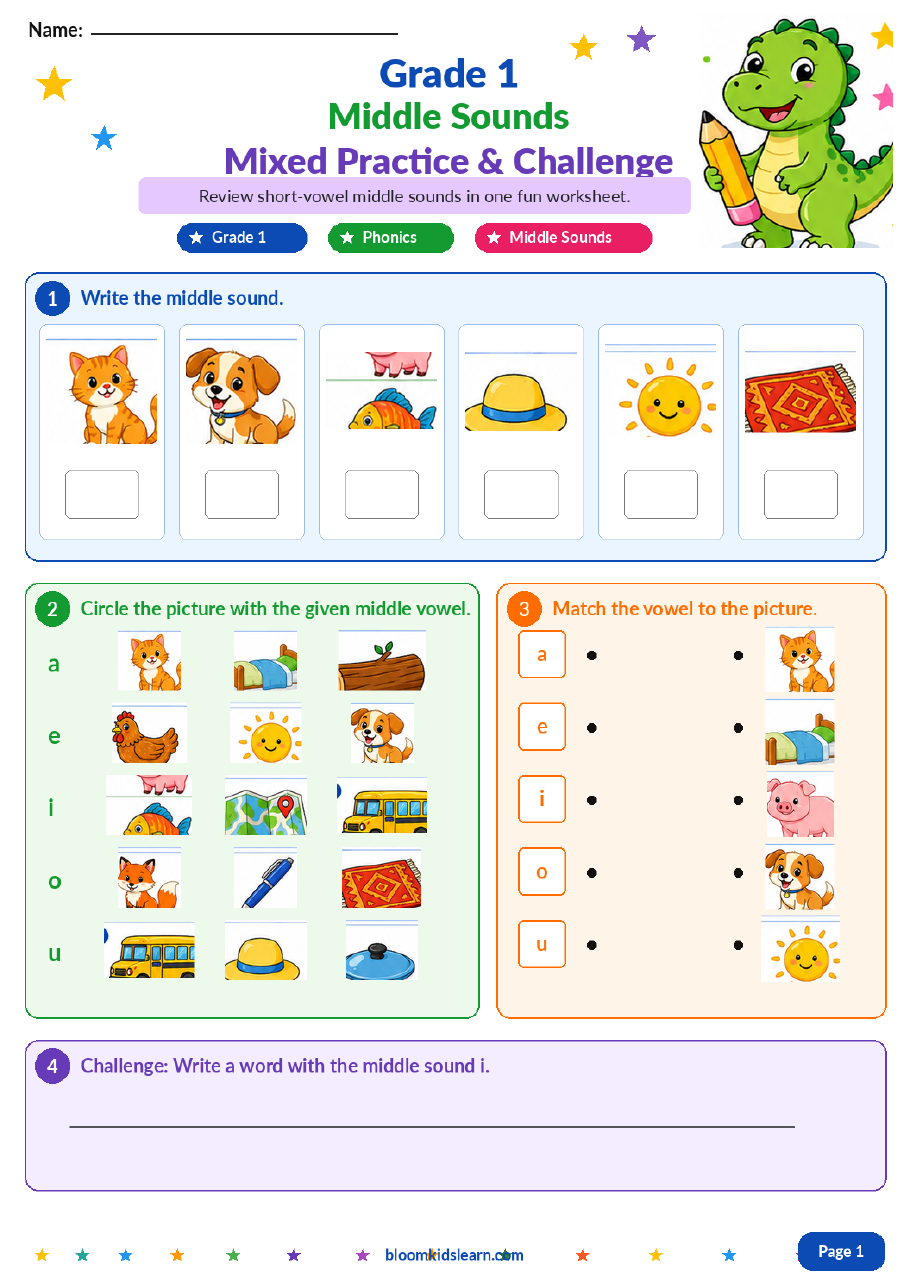
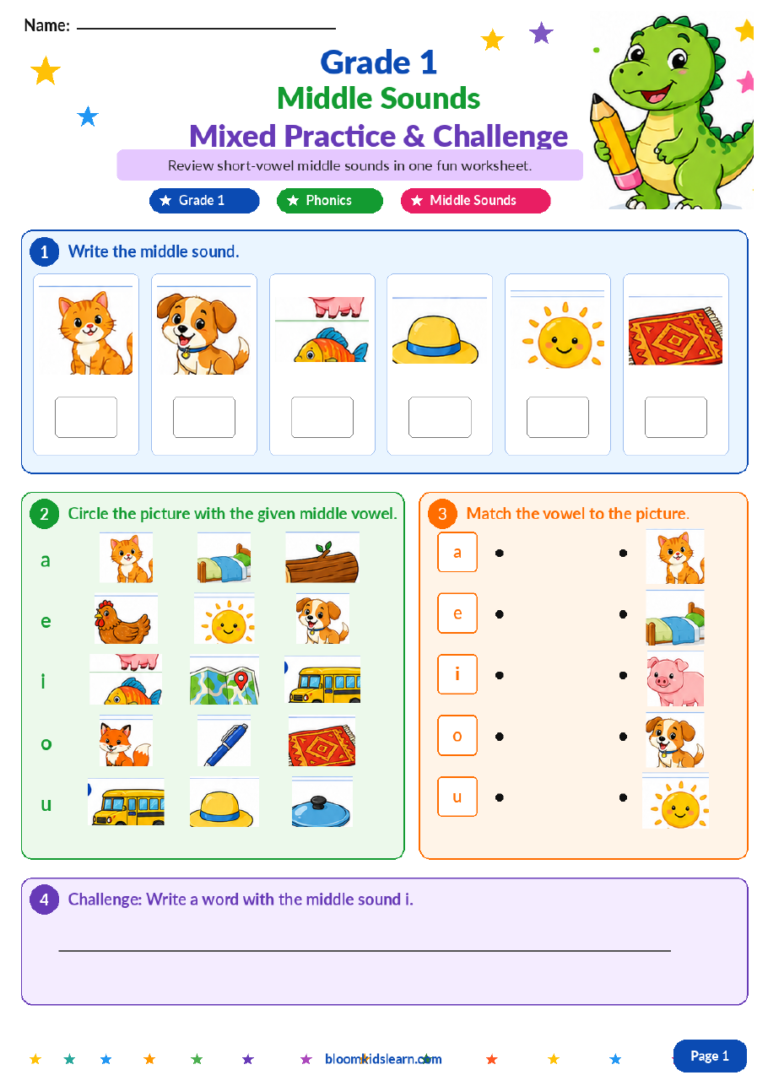
Middle Sounds Mixed Practice
Review writing, matching, choosing, missing vowels, odd-one-out reasoning, and an original short-vowel response.
Skill: Transfer middle-sound knowledge across task formats.
What Skills Do These Middle Sounds Worksheets Practice?
The collection develops short-vowel identification, phonemic awareness, medial vowel discrimination, CVC word decoding, sound-to-letter matching, early spelling, and phoneme segmentation. The pictures make the spoken word accessible, but the work is not simply picture naming. Children must attend to the word’s internal sound and connect it with print.
Different pages separate the parts of the skill. Matching lowers the writing demand. Choosing adds competing vowel options. Missing letters require recall. Sorting makes children compare several words, and mixed practice checks whether the same knowledge survives a change in format.
How Do You Teach Middle Sounds to Grade 1 Students?
Start with a word the child knows. Take cat:
- Say cat normally.
- Stretch or segment it: /c/ /a/ /t/.
- Tap three fingers or move three counters.
- Ask, “What sound do you hear in the middle?”
- Connect /a/ with the letter a.
- Blend the word again: cat.
Repeat the routine with one clear word for every vowel: bed for /e/, pig for /i/, dog for /o/, and sun for /u/. When the learner can isolate the sounds orally, introduce vowel cards. Written worksheet work should follow the spoken practice rather than replace it.
What Order Should Grade 1 Students Practice Middle Sounds?
A useful progression is:
Short Vowels
↓
Match Middle Sounds
↓
Choose the Correct Middle Sound
↓
Fill Missing Middle Letters
↓
Sort Middle Sounds
↓
Mixed Middle Sound Practice
↓
CVC Word Reading
↓
CVC Sentences
This is a suggested path, not a rigid timetable. A child who writes confidently may move quickly through matching, while a learner who mixes short e and short i may need focused contrast practice before sorting all five vowels.
How Can These Worksheets Help Grade 1 Students?
Matching lets a child demonstrate accurate listening with little handwriting. Choosing requires discrimination among possible vowels. Missing-letter work moves from hearing a phoneme to recalling and writing its grapheme. Sorting asks learners to compare words and defend a category. Mixed practice shows whether the skill transfers when the instructions and response style change.
The error pattern matters more than a total score. If a child says the correct sound but writes the wrong letter, work on sound-to-letter mapping. If the child cannot isolate any middle sound, return to oral segmentation. If errors are limited to one vowel pair, practice that contrast instead of repeating all five sounds.
How Should Parents and Teachers Use These Worksheets?
- Say each picture word aloud before asking for an answer.
- Ask the child to stretch or tap the three sounds.
- Wait for the middle sound before showing or naming the vowel letter.
- Use oral practice before written practice when guessing begins.
- Record which vowel pairs cause errors.
- Repeat only the activity that addresses the observed need.
- Gradually cover pictures and move toward text-only CVC decoding.
- Keep sessions short enough for careful listening.
Agree on the intended picture word. A child may reasonably call a rug a “mat,” but that changes the vowel. Supply the worksheet word and assess the sound response, not the child’s ability to guess the illustrator’s label.
Common Middle Sound Mistakes in Grade 1
The picture is identified, but the wrong vowel is selected. The learner may need more short-vowel listening practice. Segment the spoken word before revisiting the printed choices.
The correct vowel is spoken, but another letter is written. Work on mapping the phoneme to its grapheme with movable vowel cards.
The vowel is left blank. Use three counters and ask for the sound represented by the center counter before spelling.
Short e and short i are confused. Compare a small set such as bed/pig and hen/lid. Keep the other vowels out of the first contrast.
Picture activities are accurate, but text-only CVC words are difficult. Cover one picture at a time and blend the completed word. Move gradually into the existing CVC word pages.
Why Choose BloomKidsLearn Middle Sounds Worksheets?
This set is created for Grade 1 practice and uses clear picture-supported CVC activities with all five short vowels. The formats progress from recognition to independent writing and cumulative review. Every worksheet is printable, and the supplied answer guide is available for core items. The individual pages also include teaching steps, error guidance, differentiation ideas, and a next activity rather than presenting the PDF without context.
Frequently Asked Questions
What are middle sounds in Grade 1 phonics?
Middle sounds are phonemes heard between the beginning and ending sounds of a word. In the CVC words used here, the medial sound is a short vowel such as /a/ in cat.
How do you teach middle sounds to Grade 1 students?
Say a familiar word, segment its three sounds, identify the second sound, connect it to the appropriate vowel letter, and blend the word again. Start orally before using a worksheet.
What are the five short vowel middle sounds?
They are the short sounds commonly represented by a, e, i, o, and u, as in cat, bed, pig, dog, and sun.
Why do children struggle with middle vowel sounds?
The medial vowel is brief and surrounded by consonants, so children may notice the word’s edges first. Some vowel pairs also sound similar and need direct comparison.
How can I help my child hear the middle sound?
Stretch a familiar CVC word, tap one finger for each phoneme, and ask for the sound matched to the second tap. Use counters if the position is still unclear.
How do middle sounds help children read CVC words?
The middle vowel distinguishes words with similar consonants and completes the sound sequence needed for blending. Hearing the difference among cat, cot, and cut supports accurate decoding.
What should Grade 1 students practice after middle sounds?
Continue with complete CVC word blending and spelling, word families, and short CVC sentences. Return to focused vowel contrasts whenever decoding becomes uncertain.
 Preview
 PDF
PDF